A lot of people choosing a Japanese-style tattoo pick a subject because it looks striking, without necessarily knowing what it traditionally represents. Our style guide covers what makes this style technically well-executed; this is about what the subjects themselves actually mean.
Koi
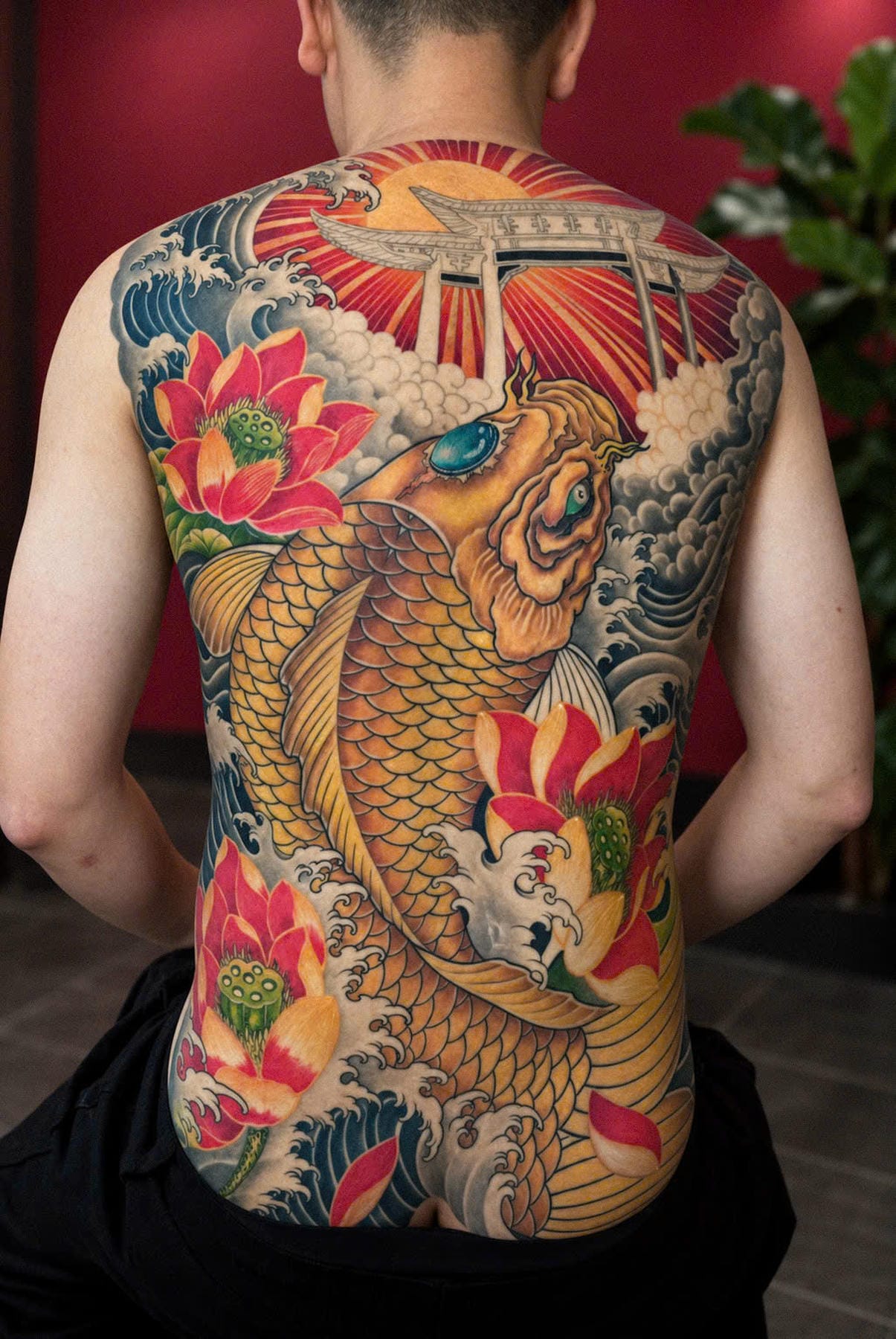
Koi traditionally represent perseverance, ambition, and transformation — tied to an old legend of a koi swimming upstream against a waterfall and being rewarded by becoming a dragon. Direction genuinely changes the reading: a koi swimming upstream symbolizes struggle and determination, while one swimming downstream tends to represent peace after struggle, or success already achieved.
Dragon
Unlike the more menacing dragons of Western imagery, the Japanese dragon represents benevolent power — wisdom, protection, and control over water and weather, closer to a guardian than a threat.
Phoenix
The phoenix represents rebirth and renewal, specifically the idea of triumphing over hardship and rising from difficulty rather than being destroyed by it.
Hannya mask
A hannya mask depicts a specific emotional state, not evil in general — it represents jealousy, obsession, and suffering, particularly the destructive power of an emotion left uncontrolled. It’s a more psychologically specific symbol than people often assume going in.
Cherry blossom (sakura)
Sakura represents the beauty of life precisely because it’s brief — impermanence itself is the meaning, not just “flowers are pretty.” It’s one of the more genuinely poetic motifs in this tradition rather than a purely decorative one.
Tiger
The tiger represents courage and protection, traditionally understood as strength specifically against evil or misfortune rather than aggression for its own sake.
Snake
A snake in this tradition represents protection, healing, and renewal — closer to the shedding-skin symbolism of rebirth than to anything sinister.
The Great Wave
Modeled on Hokusai’s famous woodblock print, a wave motif represents the power and unpredictability of nature — read as both dangerous and beautiful at once, rather than one or the other.
Choosing a subject that actually fits
None of this means you need a motif’s traditional meaning to match your exact personal story — plenty of people choose a subject because the imagery resonates with them regardless of the legend behind it, and that’s a completely legitimate reason too. But knowing what a design has represented for centuries, the way we’d encourage for any symbol with real cultural roots, means you’re choosing it deliberately rather than by accident.
What to expect at GOAT Tattoo Studio
Tell us if a specific meaning matters to you, and we’ll make sure the composition — direction, surrounding elements, what it’s paired with — actually supports that intent rather than just looking the part.
Planning a Japanese tattoo in Hanoi? Our Japanese tattoo page has prices, the artists who do this style and recent work.

View more
Nautical Star Tattoo Meaning
Swallow Tattoo Meaning: The Real Sailor Tradition Behind It
How to Find Tattoo Design Ideas Before You Book in Hanoi
Popular Small Tattoo Symbols and What They Actually Mean
Japanese Tattoo Motifs and What They Actually Mean
Daruma Tattoo Meaning: One Eye, Two Eyes and Getting Back Up
Sugar Skull Tattoo Meaning: Día de los Muertos vs. Memento Mori
Family Tattoo Symbols: Meanings and Ideas That Last